







What is Lustre?

Lustre Reflection or Scattering of Light
The word "lustre" when used in relation to rocks, minerals and gemstones describes the way light interacts with the surface of a stone.
Lustre is the reflection or scattering of light so describes a stone’s appearance in reflected light.
There are many different types of lustre. Some of the most common are;
- Vitreous
- Dull
- Metallic
- Waxy
- Greasy
Rocks, minerals and gemstones with a vitreous lustre reflect light in a similar way to glass. Vitreous is one of the most common types of lustre.
For a stone to exhibit a vitreous lustre it must have a relatively smooth surface and high reflectivity. Quartz crystals often have a vitreous lustre. A polished ruby, amethyst or malachite gemstone can also have a vitreous lustre.
Moonstone is often described as having an opalescent lustre because of the way light reflects off the surface of the stone. The correct term for this optical phenomenon is adularescence.
Polishing a rock, mineral or gemstone will usually improve lustre whether it's transparent, translucent or opaque.
Stones that exhibit a dull lustre absorb light instead of reflecting it.
There are two broad types of lustre, metallic and non-metallic. All crystals, rocks and minerals fall into one category or the other.
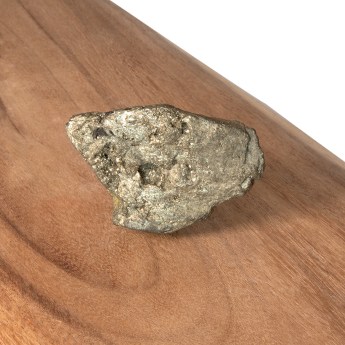
Metals have a metallic lustre whilst most other rocks and minerals are non-metallic. The two exceptions are hematite and pyrite.
The word "lustre" comes from the Latin word "lux" meaning "light". In addition to those already mentioned, other types include pearly, silky, resinous, earthy and adamantine.

What is Brilliance?
Brilliance in a gemstone refers to its ability to reflect and refract light in a way that makes it sparkle and shine.
Brilliance can only be seen in a translucent or transparent gemstone.
Lustre is often mistaken for brilliance but the two are not the same. Lustre refers to the way light reflects off the surface of a rock, mineral or gemstone.
Brilliance refers to the way light enters and reflects back to our eyes from within a faceted gemstone. It's one of the main reasons for cutting facets into a stone.
When light enters a gemstone it bounces off internal facets before being reflected back out. The more effectively it does does that the more impressive the optical effect.
Brilliance describes the brightness and radiance of a gemstone as a result of light being reflected off facets. Gemstones with exceptional brilliance have a captivating and dazzling appearance.
The way a gemstone captures and reflects light maximises its beauty which increases value.
The type of facet that's used depends on the stone, its shape and the effect that hopes to be achieved. Each facet is cut in a way that maximises the reflection of light. This increases the level of brilliance.
Brilliance is an important characteristic when determining the beauty and visual appeal of a gemstone.
Article Photos
The pyrite and quartz crystals were both photographed by Stan Celestian. The images are clickable and redirect to the original photos.
The rough malachite is from our collection. It exhibits a dull lustre.