Tiger Iron: Properties, Facts and Photos
| Contents 1. Tiger Iron Properties 2. What is Mugglestone? 3. Article Photos 4. Shop Tiger Iron |
What is Tiger Iron?
Tiger iron is a banded iron formation, or BIF for short. Many types of banded iron formations are known around the world, but the stone known as tiger iron can only be found in Western Australia.
Another type of banded iron formation often mistaken for tiger iron is jaspilite, which can be found in the USA and Ukraine.
Known for their distinctive layered appearance, banded iron formations are dense sedimentary rocks that date back 1.8 to 2.5 billion years. These geological structures are Earth's most important source of iron.
Banded iron formations are composed of relatively thin layers of iron-rich minerals, such as hematite and magnetite, alternating with silica-rich layers such as red jasper. In tiger iron, the silica layers have been altered to form tiger’s eye.
Banded iron formations, which can be hundreds of metres thick, formed when Earth was young. At this point, there was little to no oxygen in the atmosphere.
Dissolved iron, most likely from underwater volcanoes, reacted with oxygen produced in seawater by microscopic organisms called cyanobacteria. The reaction led to precipitation, a process in which substances in a solution mix together and form an insoluble product.


The result was the formation of iron oxides on the seafloor, which gradually became banded formations rich in iron and silica. Iron oxides are chemical compounds of iron and oxygen, with rust being the most common example.
Over millions of years, intense heat and pressure led to the crystallisation of these formations. Earth's natural movements caused the layers to become distorted.
As oxygen levels in the atmosphere increased, an ozone layer developed, protecting Earth from the sun's harmful rays. This allowed organisms to eventually leave the water and begin living on land.

What is Mugglestone?
Mugglestone has recently emerged as an alternative name, but it's only used within the metaphysical healing community. I can find no factual evidence to connect mugglestone with tiger iron.
This is what I discovered regarding the origins of the name:
Ironstone was historically mined in the Stoke-on-Trent and North Staffordshire areas of the UK. Mucklestone is a small village in Staffordshire.
While ironstone and banded iron formations are both sedimentary rocks used as sources of iron, they are not the same. Banded iron formations are also known as banded ironstone formations.
The name 'Ironstone' also refers to a type of pottery produced by Staffordshire potters in the 19th century. 'Iron' was used in the name to reflect its strength and durability.

One article I read states, "Mugglestone was once found in a place called Moclestone in what is now Great Britain."
There is no historical reference that includes the word Mugglestone. In the Domesday Book of 1086, there is a reference to the village of Mucklestone in Staffordshire, which it records under the name "Moclestone". However, there is no evidence that links it to a stone or other material being found there.
I've learnt after many years of writing articles that plagiarism leads to so much inaccurate and misleading information being published, especially online.
I believe the name Mugglestone probably came about because of the following chain of events:
Someone wrote an article linking tiger iron with the village of Mucklestone, probably because they believed, albeit incorrectly, that ironstone (the material mined in Staffordshire) was a banded iron formation. Tiger iron is a type of banded iron formation.
Once published, it's likely to have been plagiarised, as many articles regarding crystal healing are.
Most people who write articles to publish online are aware that duplicate content doesn't rank well in search results. Therefore, each time the article was plagiarised, minor changes were made to the wording.
At some point, the name Mugglestone is likely to have appeared, probably because of an error, and from then on, this new name for tiger iron would have spread quickly.
Since writing this article, I've seen a video on YouTube in which the presenter states tiger iron is found in Mucklestone, Staffordshire. Tiger iron can only be found in the Pilbara region of Western Australia.
No banded iron formations exist in Staffordshire.
The first article I wrote about tiger iron was in 2004. At that time, there was nothing online about it being known as Mugglestone.

Although some tiger iron can look very similar to the mineral tigers eye, they're not the same stone. With closer inspection, it's usually quite easy to tell one from the other.
Article Pictures
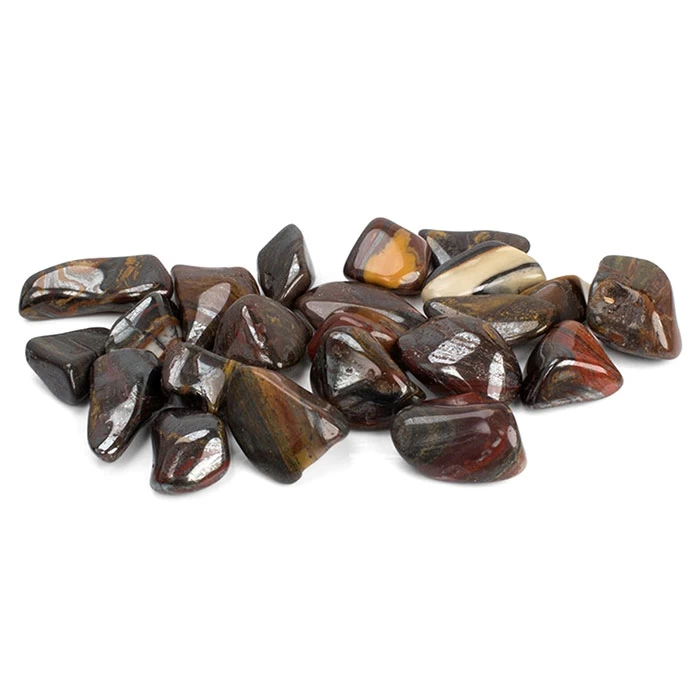
The tiger iron tumbled stones are from our collection.
The banded iron formation fragments in the second picture are 1.7 billion years old. They're located in Pike's Peak, Arizona. Despite being a banded iron formation, they're not tiger iron. Photo: Courtesy of Stan Celestian.
The next picture is courtesy of James St.John.
The tiger iron stone was once part of our collection.
The final photo is also courtesy of Stan Celestian.
The photos in our article and the links for the pop-up photos link to the original image on Flickr. You may only be able to view them if you join. Joining Flickr is free, with no additional charges.