
Online Crystal Shop

For people who loverocks and minerals
Since 2002


icons for worldwide shipping, free U.K delivery over £80, fast dispatch, excellent customer service


Polished Stones

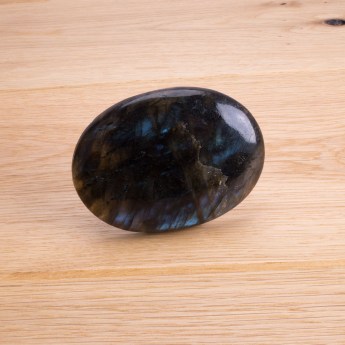
polished chrysocolla, labradorite, and agate.

Explore the colourful world of rocks and minerals through beautifully polished stones, carefully chosen for our collection.

Shop favourites include malachite, amethyst, lapis lazuli, and rose quartz.

Popular Crystals

An amethyst geode.

Amethyst

Amethyst forms in volcanic rock cavities, where mineral-rich fluids cool and crystallise over time.

Its distinctive purple colour, which fades with exposure to UV light, comes from trace amounts of iron and exposure to radiation during its formation.

Read more


Lemurian quartz crystal.

Lemurian Quartz

Lemurian Quartz crystals, which come primarily from Brazil, are highly sought after for their healing properties.

Striations are often considered a key identifying feature, but these horizontal grooves or ridges are not always present.

Read more

The Rough Stuff

Various rough rocks and minerals.

An authentic collection of raw rocks and minerals, crafted by nature over millions of years.

For those curious about Earth's past, there's a world of rocks and minerals waiting to be discovered.


Tumbled Stones

orange aventurine tumbled stones.

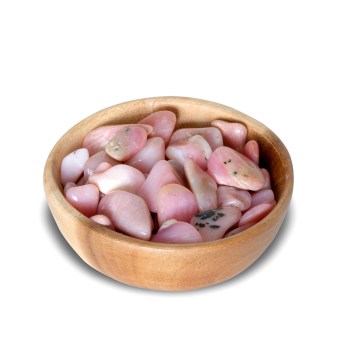
Raw crystals, rocks, and minerals, smoothed, rounded and polished.

Tumbled stones are usually produced in a rock tumbler, but in some countries the process is done by hand.

Read more

Articles & Photos

Six colourful, natural crystals


More than 100 articles exploring the history, geology, and myths behind Earth's finest treasures.

Easy-to-read articles, each focusing on an individual rock or mineral variety.

Whether you're new to rocks and minerals, browsing out of curiosity, or looking for great photos, this section has something for everyone.


We're passionate about the environment. Recyclable packaging, minimal waste, no plastic

What are Igneous Rocks?

Rough basalt, an igneous rock

How Do Igneous Rocks Form?

Igneous rocks form when hot molten rock (either magma or lava) cools and solidifies. They're one of the three main rock types, with the other two being sedimentary and metamorphic.

Igneous rocks can form above or below Earth's surface.

When they form deep below the surface as magma cools, the process takes thousands to millions of years. This type of rock is known as an intrusive igneous rock.

Intrusive rocks often have large crystals because they have plenty of time to grow. An example of an intrusive igneous rock is granite.

Igneous rocks that form above Earth's surface, often from lava expelled from a volcano, are known as extrusive igneous rocks. An example is basalt.

When lava cools too fast for crystals to grow, the rock that forms will be non-crystalline. Examples of non-crystalline, extrusive igneous rocks include obsidian and pumice.

The cooling rate of the lava and its chemical composition play a significant role in the final texture and appearance of an extrusive igneous rock. A rock that cools quickly is usually fine-grained or has a glassy texture.

Igneous rocks are widely used in construction and industry. Basalt is commonly crushed for road stone and concrete aggregate, while granite is valued as a durable building and decorative stone.

Obsidian has historically been used for cutting tools due to its sharp edges, and pumice is used as an abrasive and lightweight building material.

Article Picture

The extrusive igneous rock in our photo at the top of this article is vesicular basalt. This formed from gas-rich lava that cooled quickly, trapping gas bubbles as small holes in the rock. Photo: Courtesy of Stan Celestian. 

Pop-up photos
Pumice: Courtesy of James St. John. Granite, obsidian: Courtesy of Stan Celestian. 

Stone Mania Live Chat
How can we help?

Please write your message, we’ll respond momentarily.

Tap the green button